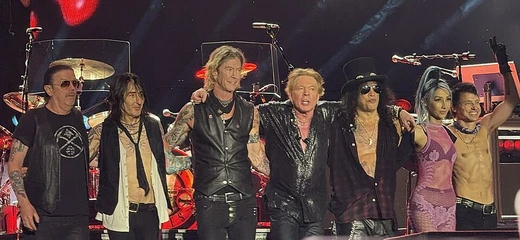
Duff McKagan Hiatus
A bassist's exit that left the band's foundation shaking during its most volatile era.
The Duff McKagan Hiatus represents a pivotal and turbulent chapter in the history of Guns N' Roses, marking the temporary absence of their original bassist during the mid-1990s. This period was defined by internal friction, substance abuse struggles, and the band's struggle to maintain cohesion while attempting to record their ambitious follow-up to 'Appetite for Destruction.' McKagan's departure created a vacuum that forced the group to rely on session musicians and temporary replacements, fundamentally altering the band's dynamic and sound during one of its most creative yet fractured years.
- character
- Duff McKagan
- role
- Original Bassist / Co-writer
- affiliation
- Guns N' Roses
- departure_year
- 1994
- return_year
- 1996
- status
- Reintegrated Member
Lore & Background
The hiatus began as a culmination of years of strain, where the relentless touring schedule and the chaotic lifestyle of the 'Use Your Illusion' tour took a severe toll on McKagan. Struggling with heroin addiction and feeling increasingly marginalized within the group's shifting hierarchy, he made the difficult decision to step away in 1994. His absence was not merely a personnel change but a symbolic fracture; the low-end foundation that had anchored Axl Rose's vocals and Slash's guitar work suddenly vanished, leaving the band adrift.
In Their Own Story
The studio air hung heavy with stale smoke and unspoken grievances. Axl paced the control room, his eyes scanning the empty chair where Duff usually sat, grounding the chaos with a steady rhythm. Without that anchor, the music felt thin, like a ship losing its ballast in a storm. Slash leaned against the console, staring at the waveform on the screen, knowing that no session bassist could replicate the soul of the man who had built this sound from the ground up. The silence between takes was louder than any guitar solo.
Reader's Guide
The era is defined by the transition from the full 'Use Your Illusion' lineup to a fractured unit struggling with identity. Musically, the band shifted away from the tight, blues-hard rock fusion of their early years toward a more experimental, industrial-tinged sound that lacked the raw power of McKagan's presence. Internal conflicts peaked during this time, as the absence of the bassist exacerbated tensions between Rose and Slash. The cultural significance lies in how it exposed the band's reliance on its core chemistry; without all five original members functioning together, the magic began to fade. This period also marked a shift in the band's public image from rebellious rock gods to a troubled entity grappling with relevance. The eventual return of McKagan offered a brief hope for redemption, but the damage to the group's unity was already done, setting the stage for their ultimate breakup.
Did You Know?
- McKagan left the band while it was still active and attempting to record new material, rather than after an official disbandment.
- During his absence, the band utilized session musicians who could not fully replicate the specific rhythm section dynamic McKagan provided.
- His return in 1996 coincided with a brief attempt to tour and regroup before the band's eventual hiatus.
- The period is often cited by fans as the beginning of the end for the classic lineup's cohesion.