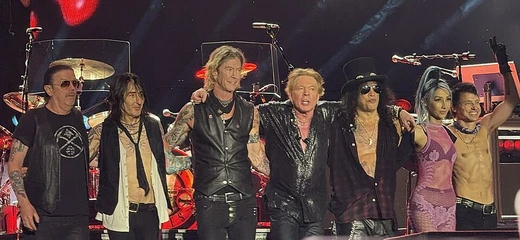
Slash
The bandana-wearing guitarist who defined a generation of hard rock sound.
Slash is the legendary lead guitarist and a founding member of the American hard rock band Guns N' Roses. Known for his distinctive top hat, long curly hair, and bluesy playing style, he became one of the most recognizable figures in rock music history during the late twentieth century. His musical contributions defined the sound of the band's debut era, blending heavy riffs with melodic sensibilities that captivated audiences worldwide. As a central pillar of the group's identity, his presence on stage was as iconic as the music itself.
- Role
- Lead Guitarist
- Real Name
- Saul Hudson
- Primary Instrument
- Electric Guitar
- Band Affiliation
- Guns N' Roses
- Era of Fame
- Late 1980s and Early 1990s
- Signature Look
- Top Hat and Long Hair
Lore & Background
Hailing from the Los Angeles music scene, Slash joined forces with vocalist Axl Rose to form the core creative engine of Guns N' Roses. His background in blues and classic rock heavily influenced the band's aggressive yet melodic approach, setting them apart from their contemporaries in the metal genre. During the peak years of their career, his guitar work became a focal point for fans everywhere. The combination of high energy performances and intricate solos created a live experience that was electric and unpredictable. His visual style, often featuring vintage clothing and accessories, matched the raw aesthetic of the music. Despite eventual departures from the main lineup due to internal band dynamics, his contributions remain etched in rock history. He continued to perform and record with various projects, ensuring his influence on guitar culture persisted long after the initial heyday.
In Their Own Story
The backstage air was thick with hairspray and cigarette smoke. He adjusted the strap of his sunburst instrument one last time, checking the tuning under the dim green lights. The roar from outside the stage door grew louder, a tidal wave of anticipation ready to crash over him. He pulled down his hat brim, took a deep breath, and stepped into the spotlight.
Reader's Guide
Slash emerged from the Los Angeles music scene in the mid-eighties, bringing a blues-infused style to hard rock. His partnership with vocalist Axl Rose created an explosive dynamic that defined the era for millions of listeners. During the height of their fame, the band toured relentlessly across continents. The guitarist became known for his distinctive top hat and long curly hair, becoming a visual icon alongside his sonic contribution to the group's identity. Following internal tensions within the group during the nineties, he departed to pursue solo projects while maintaining his legacy as one of rock history's most influential players. His riffs remain timeless standards in guitar literature. He favored specific vintage guitars that produced a thick, singing tone recognizable worldwide. This sound powered anthems that resonated with fans globally for decades without needing complex technical showmanship. Even after leaving the lineup, his influence persisted through collaborations and solo albums. He remains synonymous with the raw energy of American hard rock culture from that specific golden age of music history.
Did You Know?
- His birth name is Saul Hudson, though he adopted the stage moniker early in his career.
- He plays left-handed but typically uses right-handed guitars flipped upside down.
- The black top hat became a permanent part of his performance persona during live shows.
- Before joining Guns N' Roses, he was a member of the band Hollywood Rose.
Formation and Early Tensions
In the mid-1990s, following an exhaustive world tour with Guns N' Roses, Slash retreated to Los Angeles to channel his creative energy into a new venture. After selling his Walnut House residence and relocating to Mulholland Drive, he constructed a home studio dubbed 'The Snakepit' above his garage. Here, alongside drummer Matt Sorum, he began crafting demos from material written on the road. The project quickly expanded to include guitarist Gilby Clarke and Alice in Chains bassist Mike Inez, creating a collaborative environment where they jammed nightly. Although Axl Rose initially rejected these recordings, Slash proceeded with the lineup, eventually adding Eric Dover of Jellyfish as lead vocalist. This decision sparked internal friction; Sorum felt slighted because Slash had not sought his approval before hiring Dover. Despite this disagreement, the group recorded twelve tracks by 1994, just as Guns N' Roses entered a hiatus, setting the stage for their debut album.
Debut Album and Touring Challenges
The band's first release, *It's Five O'Clock Somewhere*, arrived in February 1995 under Geffen Records. The title was inspired by an airport phrase Slash overheard, though the label insisted on branding it as 'Slash's Snakepit' rather than just 'The Snakepit,' a move Slash reportedly opposed. The album featured contributions from former Guns N' Roses members Duff McKagan and Teddy Reed, alongside other seasoned musicians like Paulinho da Costa. While critics praised its blues-hard rock fusion, the songwriting received mixed reviews regarding originality. Touring support proved complicated; original members Inez and Sorum declined to tour due to other obligations, leading Slash to recruit James LoMenzo and Brian Tichy from Pride & Glory. The band performed across the US, Europe, Japan, and Australia, even sharing stages with Metallica. Slash described this period as drama-free and enjoyable, yet Geffen abruptly withdrew financial backing when Axl Rose signaled a return to Guns N' Roses activities, forcing the project's dissolution.
Blues Interlude and Reformation
After officially leaving Guns N' Roses in 1996 due to irreconcilable musical differences with Axl Rose, Slash explored different sonic territories. He briefly toured Japan with Chic and contributed to a film soundtrack before forming a blues cover ensemble that evolved into Slash's Blues Ball. This group, featuring bassist Johnny Griparic and saxophonist Dave McClaren, performed covers of legends like B.B. King and Steppenwolf across various festivals until 1998. Recognizing the potential for a new direction, Slash approached Griparic in 1997 to reassemble Snakepit with a fresh roster. The revamped lineup included singer Rod Jackson, guitarist Ryan Roxie, and drummer Matt Laug, both of whom had previously played in Alice Cooper's solo band. This iteration aimed to capture a renewed energy distinct from the earlier incarnation, eventually leading to their second studio effort.
Second Album and Final Dissolution
The reformed Slash's Snakepit released their sophomore album, *Ain't Life Grand*, in 2000. The project was preceded by a supporting tour with AC/DC, highlighting the band's resilience and continued relevance in the rock scene. However, personnel changes occurred even before the headlining tour commenced; guitarist Ryan Roxie departed following the album's completion, replaced by Keri Kelli for live performances. Despite the successful recording and touring efforts, internal cohesion remained fragile. After their final show, Slash disbanded the group, citing a lack of commitment from his bandmates as the primary reason for ending the project once again. This dissolution marked the end of Snakepit's second chapter, paving the way for Slash to form Velvet Revolver in 2002 with former Guns N' Roses colleagues Matt Sorum and Duff McKagan, shifting his focus toward a new supergroup dynamic.
Frequently Asked Questions
Who is Slash?
Slash is the stage name of Saul Hudson, who served as the iconic lead guitarist for Guns N' Roses. He rose to prominence in the late twentieth century with a look featuring a top hat and flowing curls.
What was Slash's role in the band?
As one of the group's founders, he played electric guitar using a blues-influenced approach mixed with melodic sensibilities. These performances helped establish the sonic identity for the group's initial worldwide success.
Why is Slash important to rock history?
He stands out as a major figure in hard rock history because of his distinct sound and memorable appearance. Fans remember him just as much for his energy on stage as they do for the songs he played.
What era is Slash most associated with?
His peak period of recognition occurred throughout the late eighties and into the early nineties. This timeframe marked the height of his influence within the global hard rock scene.
What is Slash's signature look?
He is visually defined by a distinctive top hat paired with long, curly hair often accessorized with a bandana. This specific aesthetic became synonymous with the hard rock image of that era.