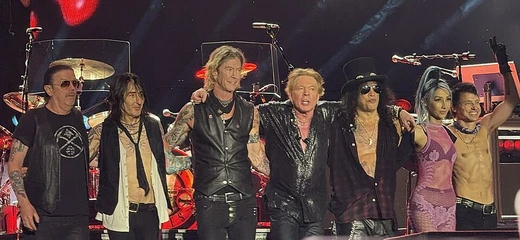
Hollywood
Where the neon lights shine brightest, the shadows are deepest and the music is loudest.
Hollywood serves as the glittering yet decaying heart of the Guns N' Roses universe, a sprawling metropolis where the American Dream curdles into a nightmare of excess and desperation. It is not merely a backdrop but a living antagonist, a place where the pursuit of rock stardom collides violently with the harsh realities of poverty, addiction, and systemic corruption. For the band members, it represents both the ultimate stage for their rebellion and the dangerous trap that threatens to consume them whole.
- Type
- Primary Setting / Urban Environment
- Atmosphere
- Gritty, Neon-Lit, Decaying Glamour
- Key Conflict Location
- Center Stage for the Rock & Roll Apocalypse
- Social Dynamic
- Extreme Wealth vs. Street-Level Desperation
- Symbolism
- The Corrupting Nature of Fame
Lore & Background
The geography of this Hollywood is defined by its contrasts: the manicured hills overlooking the chaotic canyons below, where the wealthy hide behind high walls while the forgotten scramble for scraps. It is a character in itself, indifferent to the struggles of the musicians who pass through it. The music that echoes off its concrete surfaces tells stories of rebellion, but the city always demands a toll. Whether it is the allure of the studio lights or the danger lurking in the alleyways, Hollywood ensures that no one leaves unchanged.
In Their Own Story
The neon sign above the club flickered, casting a sickly green glow over the puddle where Axl stood, watching his own reflection warp and distort. The bass from inside thumped against his chest, a rhythmic heartbeat for a city that refused to sleep. He could smell the rain mixing with exhaust fumes, the scent of Hollywood at its most honest. Behind him, the band loaded their gear into the van, eyes tired but burning with the fire that had brought them this far. Tonight, they would play for the ghosts in the front row and the demons waiting in the wings.
Reader's Guide
Hollywood is the central stage upon which the entire saga unfolds, acting as both a magnet and a millstone for the characters. It represents the ultimate destination for aspiring musicians, promising fame and fortune while hiding a labyrinth of danger beneath its shiny surface. The city's layout dictates the narrative flow, pushing characters from the seedy underground clubs to the high-stakes corporate suites. Its significance lies in its ability to test every character's resolve. It is where alliances are forged in sweat and broken in betrayal. Understanding Hollywood is key to understanding the tragedy and triumph of the story, as it forces everyone to confront who they really are when the lights go down.
Did You Know?
- The city is often depicted as a character that actively influences the fate of the band members through its chaotic energy.
- Many iconic scenes take place in locations that mirror real-world venues but are stylized to fit the franchise's darker tone.
- The contrast between the wealthy elite and the street-level struggle is a recurring visual theme throughout the setting.
- Hollywood serves as the primary catalyst for the evolution of the band's sound from raw punk energy to polished rock anthems.
Formation and Early Identity
Hollywood Rose emerged in June 1983 as a pivotal glam metal collective, originating from a chance meeting between guitarist Chris Weber and Izzy Stradlin at the Rainbow Bar and Grill. Facilitated by Tracii Guns of L.A. Guns, this partnership quickly expanded to include Axl Rose, who was recruited on Stradlin's suggestion. Initially operating under the moniker AXL, where Rose adopted his iconic stage name, the group performed their debut at The Orphanage in North Hollywood before settling on the name Hollywood Rose after discovering a naming conflict with an existing New York band. The core trio of Rose, Stradlin, and Weber was supported by a rotating cast of live musicians, including bassists Rick Marrs, Andre Troxx, Daniel Nicolson, and Steve Darrow, alongside drummer Johnny Kreis. This fluid lineup established the foundational sound that would eventually evolve into one of rock's most legendary acts.
The Catalyst for Guns N' Roses
The band's trajectory shifted dramatically in 1984 following a series of volatile events that reshaped their personnel and destiny. After recording a five-song demo with financial backing from Weber's father, tensions peaked during a performance at the Music Machine where Weber accidentally struck Rose with his guitar headstock. This incident led to Weber's dismissal and Stradlin's subsequent departure in protest over Slash's recruitment. Despite these fractures, the group persisted briefly before disbanding following their final show at The Troubadour. A brief reunion occurred on New Year's Day 1985 for a celebration gig featuring Rose, Stradlin, Darrow, and L.A. Guns drummer Rob Gardner, with Tracii Guns filling in for Weber. This gathering served as the prelude to the March 1985 merger with L.A. Guns, officially birthing Guns N' Roses and setting the stage for their historic rise.
Musical Legacy and Songwriting
Although Hollywood Rose existed for a short period, its musical contributions proved enduring within the catalog of Guns N' Roses. Several compositions from this era were reworked and featured on major releases, including 'Anything Goes' on Appetite for Destruction and tracks like 'Reckless Life,' 'Move to the City,' and 'Shadow of Your Love' across various live albums and compilations. The original five-song demo remained a historical artifact until its official release in 2004 as The Roots of Guns N' Roses, which included remixes by former bandmates Gilby Clarke and Fred Coury. However, the songwriting credits generated significant controversy; in 1998, Chris Weber sued Axl Rose alleging he was denied proper credit for co-writing 'Shadow of Your Love' and 'Back Off Bitch.' This legal battle highlighted the complex ownership issues stemming from the band's early collaborative efforts.
Legal Battles and Post-Disbandment
The dissolution of Hollywood Rose led to decades of intermittent activity and legal friction regarding their intellectual property. In 2004, Chris Weber, who had since formed U.P.O., sold the group's original demo to Cleopatra Records for release. This move prompted Axl Rose, Slash, and Duff McKagan to sue for trademark infringement and rights violations, seeking to block the album's distribution. The court ultimately denied their request for a preliminary injunction, allowing the project to proceed as a historical document of the band's origins. Years later, in 2012, Cleopatra Records reissued an album by a tribute act named Hollywood Roses, which featured guest appearances by veterans like Tracii Guns and Weber but contained no original material from either group. These events underscored the lasting commercial and legal complexities surrounding the band's brief but influential existence.
Frequently Asked Questions
Who is Hollywood in this context?
It is not a person but the glittering yet decaying heart of the universe where the American Dream curdles into nightmare. This metropolis acts as a living antagonist rather than just a passive location for the band's history.
What are Hollywood's powers or role?
Its primary function is to trap musicians in a cycle of excess, addiction, and systemic corruption while offering the ultimate stage for rebellion. It functions as a dangerous environment that threatens to consume anyone seeking rock stardom within its borders.
How does Hollywood's story end?
There is no clean resolution because the pursuit of fame constantly collides with harsh realities like poverty and desperation. The city remains a persistent shadow where neon lights shine brightest but darkness lurks deepest.
Why is Hollywood important to the band?
It represents the corrupting nature of fame that defines their journey from street-level desperation to extreme wealth. Without this setting, their rebellion against the system would lack the necessary conflict and atmosphere.
What defines the social dynamic of this setting?
The environment thrives on the tension between extreme wealth and the gritty reality of the streets below. This contrast creates the perfect backdrop for the Rock & Roll Apocalypse centered around the band's rise.