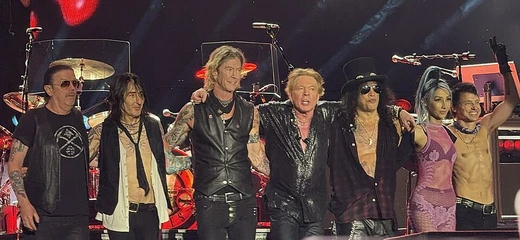
Not in This Lifetime... Tour
The impossible reunion that brought rock royalty back together for the ages.
The Not in This Lifetime... Tour stands as a monumental chapter in rock history, marking the first time since the early nineties that Axl Rose, Slash, and Duff McKagan shared a stage together. Originally deemed impossible by industry observers and fans alike, this reunion transformed from skepticism into one of the most anticipated musical events of the twenty-first century. Spanning multiple years and continents, the tour served as both a celebration of past glories and a testament to the enduring bond between the band's core members. It revitalized interest in the catalog while introducing their legacy to a new generation of listeners who experienced the music through live performance rather than vinyl or streaming.
- Start Year
- 2016
- Core Reunion Members
- Axl Rose, Slash, Duff McKagan
- Primary Album Focus
- Appetite for Destruction and Use Your Illusion
- Global Reach
- North America, Europe, Asia, Oceania
- Status
- Completed Initial Run
- Tour Name Origin
- Derived from Slash's previous comments
Lore & Background
Before this era began, the fracture between the founding members was viewed as permanent. The cultural weight of seeing them perform alongside one another carried a heavy emotional burden for decades of fans who had waited in vain. This tour dismantled the myth that the band could never function again, proving that musical chemistry could survive personal history. The atmosphere surrounding each show was electric, fueled by nostalgia and relief. Fans traveled from every corner of the globe, creating an international community bound by shared memories of the music. The production values matched this significance, blending modern stadium capabilities with the gritty aesthetic that defined their original image. Beyond the spectacle, the tour redefined what a legacy act could achieve commercially without relying solely on nostalgia. It demonstrated that authentic rock energy still commanded massive crowds in an era dominated by digital consumption and pop culture shifts.
In Their Own Story
The arena hummed with anticipation before the house lights dimmed completely. A single spotlight cut through the haze, illuminating the familiar silhouette of a guitar neck against the darkness. When the first chord struck, it wasn't just sound; it was a physical wave that hit the crowd like a memory returning to life. In that moment, time collapsed, and two decades vanished into the roar of approval.
Reader's Guide
The journey commenced across European capitals before expanding to North America and beyond, touching nearly every continent with a dedicated audience base. Early legs featured a tight setlist heavily anchored by Appetite for Destruction classics, satisfying long-time followers who waited decades for this sound. As the tour progressed, the band incorporated deeper cuts from Use Your Illusion albums, extending show runtimes significantly to accommodate fan demand for nostalgia. While generally stable compared to earlier eras, technical challenges occasionally arose during massive stadium productions, requiring quick adjustments by the road crew. The dynamic between the reunited core members remained a focal point of media coverage throughout the run. Specific nights featured guest appearances or surprise song selections that became legendary among attendees. Routes often bypassed traditional markets to reach dedicated fanbases in Asia and South America. Setlists evolved organically, with certain tracks appearing only sporadically to keep audiences guessing. The sheer scale of production involved pyrotechnics and lighting rigs that rivaled modern spectacles while maintaining a classic rock aesthetic. Despite the passage of time, the energy on stage mirrored the raw intensity of the band's prime years.
Did You Know?
- The tour name references a quote Slash once made about never performing with Axl again.
- It marked the first live performance together for the trio since the early nineties.
- Setlists frequently included songs rarely played during the original album cycles.
- The production scale was among the largest ever assembled for a rock band reunion.